Sonata in C Major, K. 545: 2nd Movement letter notes
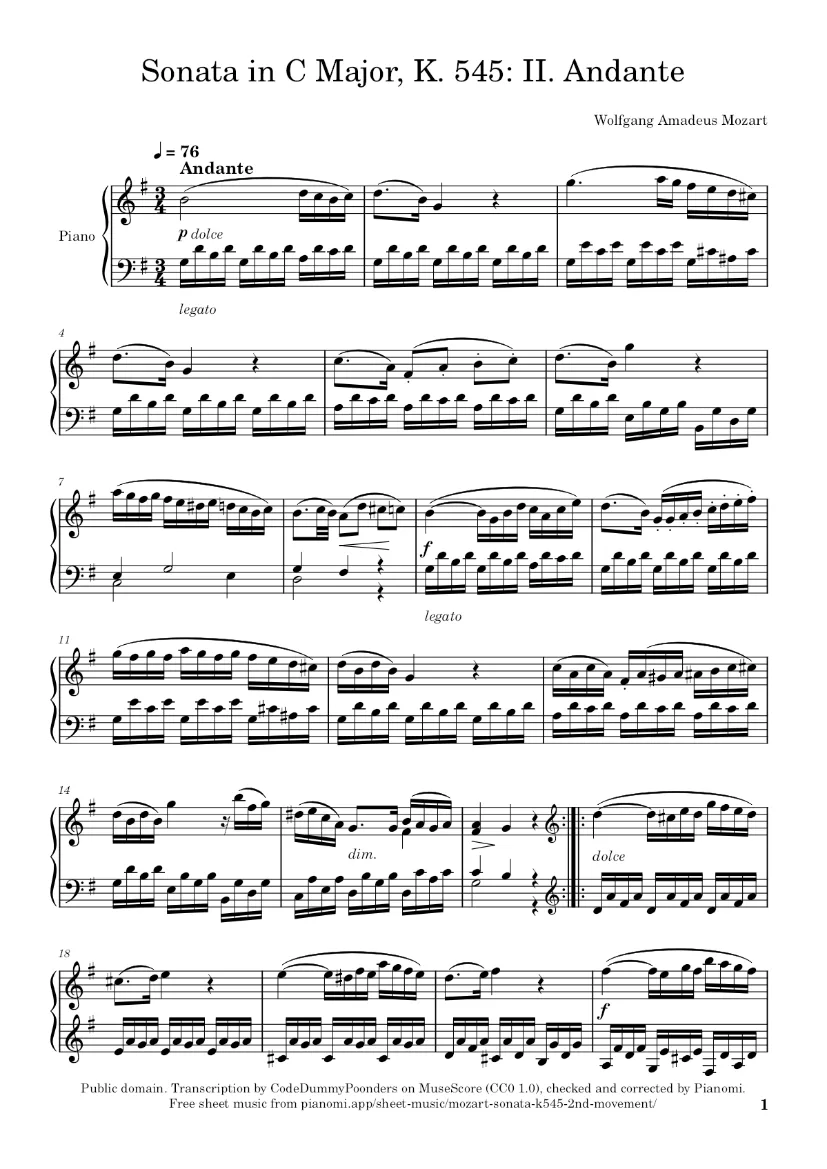
The tune’s notes by name, bar by bar (the right hand’s top line), bars 1–16. ♯ is a sharp, ♭ a flat: play the black key just above or below.
- B D C B C
- D B G
- G A G F♯ E D C♯
- D B G
- C A F♯ A B C
- D B G
- A G F♯ G F♯ E D♯ E D C B C
- B C B A D C♯ C
- B G B D C A C E
- D B G G A B C D E F♯
- G F♯ G F♯ A G F♯ G F♯ E D C♯
- D B D B G
- C A C A F♯ A G♯ A A♯ B C C♯
- D B D B G B F♯ G
- D♯ E C A G G B A G A
- A G
The names alone leave out the rhythm and the left hand: the music above has both, and the score with note names prints every note’s name under it.
About Sonata in C Major, K. 545: 2nd Movement
This is the middle movement of the sonata Mozart entered in his catalogue in 1788 as a little sonata for beginners, printed in 1805. It is in G major, in 3/4, and marked Andante, a walking pace. The left hand plays the Alberti pattern of the first movement again, this time in sixteenths (G, D, B, D in bar 1).
The tune is simple (bars 1 to 8) and is played again with small runs added (bars 9 to 16). The middle section, from bar 17, moves through D major and then turns darker, with flats creeping in from bar 33. The first tune returns at bar 49, and a short ending closes the movement in the same calm mood.
How hard is Sonata in C Major, K. 545: 2nd Movement?
It looks easy and isn’t quite. The notes are slow, but the left hand’s steady sixteenths and the decorations in the tune need a calm, even touch. It is an intermediate piece, and a good one to learn after the first movement.
At sight, it’s harder to read than all 44 of Pianomi’s sight-reading levels, which end at about grade 3 sight reading, at gentle tempos. What takes it past them: busy hands together and big jumps. On top of that: rests, accidentals, moving out of position, chords with sharps or flats, left-hand jumps and one sharp.
How to practise it
The left hand is the hard part. Its pattern of four sixteenths repeats for bars on end, and it has to stay quiet and even while the right hand sings. Practise it alone first, then lower the weight of your hand until you can hear the tune clearly above it.
The right hand’s decorations are small groups of quick notes (bar 3, bar 7 and the runs in bars 10 and 11). Learn the plain tune first, then fit the decorations in without hurrying, keeping the beat steady.
In the darker middle section the harmony changes quickly, so read the accidentals carefully. The key signature says F♯, but in bar 41 the left hand plays F natural.
The score
- Composer
- Wolfgang Amadeus Mozart (1756–1791)
- Catalogue
- K. 545
- Written
- 1788
- Key
- G major
- Time
- 3/4
- Tempo
- Andante, ♩ = 76
- Length
- 74 bars, about 4 minutes with its repeats
- Range
- G2 to D♯6
Transcribed by CodeDummyPoonders on MuseScore and given to the public domain (CC0 1.0). We compared every note with other transcriptions and early editions and corrected it where it was wrong.